Showing posts with label facts. Show all posts

All About Halloween


Every child knows Halloween as a holiday where they get to dress up as their favorite people, characters or things and go around and collect candy from the neighborhood.  I remember as a child it was always one of my favorite holidays, fantastical and sometimes a little crazy.  How often as a child, however, do you remember thinking, “How did trick or treating start?  Why do we dress up?”  My guess is probably never.  It is, however, exactly the type of thing that we think of here at Atmospheric Noise.


In truth, the origins of Halloween are very muddled.  It has ties to Western European harvest festivals, pagan rituals, Christian feasts, among others.  The term “Halloween” dates back to about 1745, coming from “All Hallows’ Eve,” which has a past in and of itself!   Many of today’s Halloween customs have been influenced by Celtic customs and beliefs, some from pagan beliefs and others from Celtic Christianity.  There are many holidays toward the end of the year that celebrate the harvests, and also the coming of winter.  Samhain, for example, is seen as a time when the spirits or fairies are able to come into our world more readily and are even more active than normal.  Feasts forSamhain are often held where the souls of the dead kin were beckoned to attend and a place was set for them at the table, as people believed the dead could revisit their families on these nights. 


In Scottish and Irish culture, guising (or dressing up) can be traced back to at least the 18th century, where people would dress up and go door to door and sing songs or recite poems in exchange for food. A similar practice can be seen in Christianity for All Souls’ Day or All Saints day, called souling.  On this holiday, people would bake small cakes (called souls) and hand them out to children and the poor who came door to door.  Traditional “souling” songs would be sung, such as:


A soul! a soul! a soul-cake!
Please good Missis, a soul-cake!

An apple, a pear, a plum, or a cherry,

Any good thing to make us all merry.

One for Peter, two for Paul

Three for Him who made us all.


In southern Ireland, guisers would follow a man dressed as a Láir Bhán (a white mare), who would lead them house to house collecting food.  In return for the food, the households would receive good fortune from the Muck Olla (the god of the dead in Celtic culture).  There are even more instances of an early form of trick or treating throughout different cultures, partially due to a mostly universal belief that the veil between worlds was thin on this night and spirits could be warded off by human wanderers.


Even Jack-o-Lantern’s have a place in history, having started out being a primitive sort of lighting for guisers carved out of turnips or mangel wurzels, hollowed out with grotesque faces to represent spirits or goblins, and filled with a candle to light the way.  They were very common in Ireland and Scottish culture, but can be found in almost every society.


As you can tell, the history of Halloween is as much a mixing pot from history as our society is as a whole!

The Ouija Board: The Automatism Theory and Beyond


ouija board theories


The history of the Ouija board is something that has always been shrouded in mystery. Some people speculate that the board came from Egyptian times and others think that the history is Chinese. There are also some scientists that speculate that the ancient Greeks use divination tools similar to today's Ouija boards.


The Ouija board is a simple board with an alphabet numerical symbols, a movable planchette and is used to communicate with spirits. The etymology of the term Ouija is ambiguous, but it is surmised that the word Ouija is a combination of two words "oui" and "ja", the first being the French translation of yes and the second being a German translation which also means yes. Thus the term Ouija actually means "yes, yes" which is meant to be an invitation for spirits to communicate.


Vintage Ouija Board


There are number theories pertaining to how Ouija boards work, the most popular being that Ouija boards work as a form of automatism (this being the belief of the skeptic), and the other belief being that the Ouija board is working because an actual spirit is communicating with us. Automatism is believed to be an involuntary act where a person behaves in a certain way without being consciously aware of the behavior. It is believed that they affect the planchette with their hands because of their subconscious mind. When two or more people are using the Ouija board, it is believed that the board is active on the a collective automatism. While collective automatism may account for some successful Ouija board sessions, it is more likely that collective automatism can explain unsuccessful Ouija board sessions even better. If two or more individuals are using the board, each individual has a subconscious that is affecting their body in ways that the consciousness is it unaware of. This being the case, it is possible that two or more individuals will witness a clash of subconscious efforts which makes sessions where weird spellings are incoherent gibberish or nonsensical messages are the result.


For every skeptic who believes in the ideamotor concept, there seems to be another person who believes fully in the power of the Ouija.  Most of those who believe stand by the idea that spirits that you can contact through the Ouija board come from the "lower astral plane," and are often confused or violent.  They tout the importance of never asking a spirit to come into the physical plane, nor count numbers or the letters backward on the Ouija board.  Most of these types of people simply say "stay away" as a way of staying safe when it comes to a Ouija Board.


Either way you believe, Ouija boards have a certain place in our history, our folklore and our legend.  They've evolved through history (though not by much, and if you don't believe me, check out this gallery of vintage Ouija boards throughout history)


My Top 5 Favorite Unexplained Animals

Just as society has held up a belief of aliens, ghosts and the like, we as a people love the idea of crazy animals.  There's an entire study, called Cryptozoology, that is devoted to the study and development of concepts around "hidden" animals.  I love the idea- a whole devotion of science that spends time on animals that lack physical evidence to their existence, but they exist over time or through mythology.  Now, I am certain that you have heard famous tales of the sasquatch, the loch ness monster or the Chupacabra- but there are mountains of stories about potentially "hidden" animals.  Here are my Top 5 Favorite Unexplained Animals!


The Kraken


Once a mighty beast of the seas, this animals myth has now been downgraded to that of a giant squid.  I personally would like to think that the Kraken may have been a giant squid, but it was seriously the most giant squid that ever existed. He probably lived for a thousand years before his water was too polluted and his heart just couldn't handle any more terrorism.


Pierre Dénys de Montfort, 1801


Below the thunders of the upper deep;

Far far beneath in the abysmal sea,

His ancient, dreamless, uninvaded sleep

The Kraken sleepeth: faintest sunlights flee

About his shadowy sides; above him swell

Huge sponges of millennial growth and height;

And far away into the sickly light,

From many a wondrous grot and secret cell

Unnumber'd and enormous polypi

Winnow with giant arms the slumbering green.

There hath he lain for ages, and will lie

Battening upon huge seaworms in his sleep,

Until the latter fire shall heat the deep;

Then once by man and angels to be seen,

In roaring he shall rise and on the surface die.

-Alfred Tennyson


An illustration from the original 1870 edition of Twenty Thousand Leagues Under the Sea by author Jules Verne


Ogopogo


I have to admit, I really love this monster because his name is fun to say.  Ogopogo. Go ahead.  Say it out loud.  Say it fast, say it slow, say it 10 times fast.  It's fun.  He's a cryptid lake monster that lives in Okanagan Lake, in British Columbia, Canada.  Despite the fact that most of the physical evidence (ie photographs and videotapes) have been debunked as being floating logs, this mythical creature has been living there since 1860.


The Hodag


A known and admitted hoax, this animal has an amusing story behind it.  A man named Eugene Shepherd was apparently bored one day in 1893, and created an animal that was described as "the fiercest, strangest, most frightening monster ever to set razor sharp claws on the earth. It became extinct after its main food source, all white bulldogs, became scarce in the area."  Three years later, he claimed to have a live specimen (as the first one he captured they burnt badly), and when spectators came from far and wide, he had to explain to them it was a hoax.  None of this is really the reason I love this story.  The best part about it, is that even today, the Hodag is the symbol of Rhinelander, Wisconsin.  They have a large statue in town, a festival in its honor every year and it is the mascot of their high school.  It's even been in video games, television shows and books.  Just goes to show you that a short and simple, ADMITTED hoax, can become a beloved icon for more than 100 years to come!


Garou


Garou, Lycanthrope, or Werewolf... No matter what you want to call it, it has been scaring small children and fragile adults for centuries.  Perhaps someone ran into a larger than normal wolf or an angrier than normal human.  Perhaps it was governmental experimentation.  Either way, we've got the wicked impression (with the exception of wolverine) that we're all very lucky that they don't actually exist.  Unless you're a nerd, and then you'll love playing a Garou in White Wolf's "Werewolf" role playing game.


Mokele-Mbembe


Mokele-Mbembe (which is a mouthful) is loosely translated to  "one who stops the flow of rivers", and its legend has been around since the 1700's.  It is reportedly omnivorous, and likes living in the deep areas of river beds.  Despite its longevity, there is no physical proof, either disputed or otherwise.  Legend or not, a dinosaur in my river?  That's cool.

Facts We Bet you Didn't Know about Art

Students who study art are 4 times more likely to be recognized for academic achievement and 3 times more likely to be awarded for school attendance.


New brain research shows that not only does music improve skills in math and reading, but it promotes creativity, social development, personality adjustment, and self-worth.


On 3rd December 1961 Henri Matisse's painting Le Bateau was put the right way up after hanging upside-down for 46 days without anyone noticing at the Museum of Modern Art in New York, America.


 In 1658 the first illustrated book for children was published in Germany.


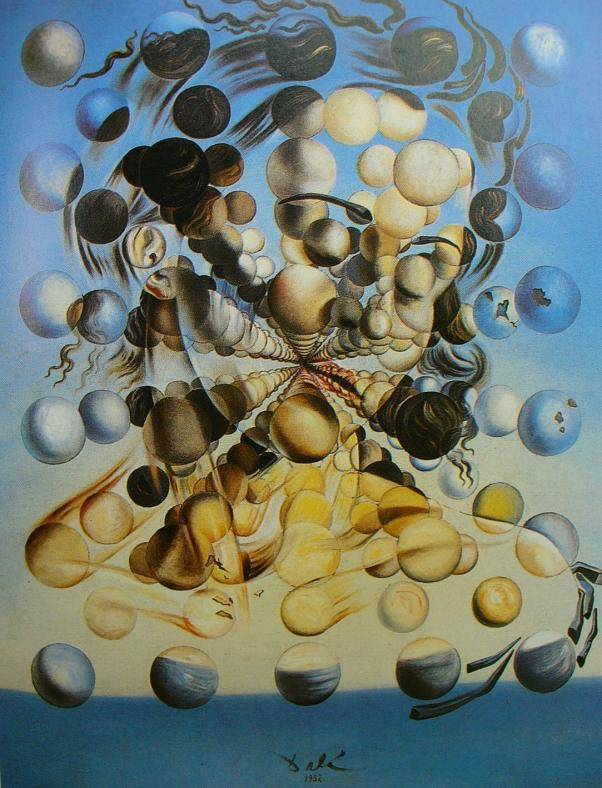
In all of Dali's paintings you can find a self-portrait. That is, if you look hard you will see at-least a silhouette of Dali himself.


Pablo Picasso's full name: Pablo Diego José Francisco de Paula Juan Nepomuceno María de los Remedios Cipriano de la Santísima Trinidad Martyr Patricio Clito Ruíz y Picasso. You can memorize that or simply say "did you know that Pablo Picasso had 23 words in his name?"


Salvador Dali arrived to give a lecture at London exhibition wearing a diving suit and diving helmet. Nobody could hear him. Eventually he began to asphyxiate in the suit, which had an airtight seal. The audience, thinking it was just a performance, applauded wildly until somebody finally popped open the helmet.


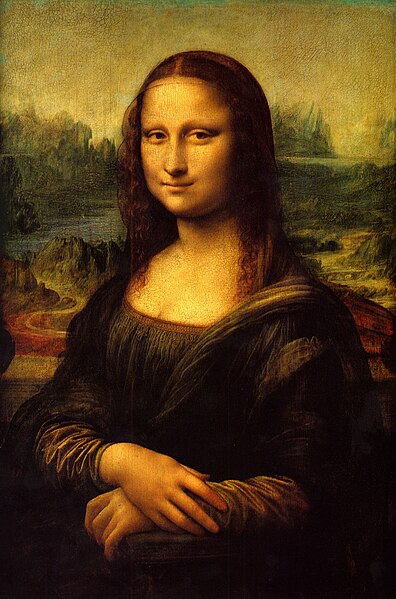
Leonardo da Vinci spent 12 years painting the Mona Lisa's lips.


When Leonardo da Vinci's Mona Lisa was stolen from the Louvre in 1912, 6 replicas were sold as the original, each at a huge price, in the 3 years before the original was recovered.


During his entire life, artist Vincent Van Gogh sold just one painting; Red Vineyard at Arles.  (Support your local, living artists!)


Be a Better Artist Thanks to the Internet

Thanks to the internet, it is possible to access a wealth of information to help you become better at, well, anything!  This post is designed to help you to become a better artist (in almost any medium).


This first site is devoted to helping you learn how to draw various things. Visit DragoArt to find tutorials on animals, landscapes and much more!


Want to learn how to paint?  Check out the Painting Lessons section at Art is Fun!


Want to learn how to sculpt something realistic and surprise your friends and family?  Try Charles Oldham's learn to sculpt techniques!


For printmaking, I'll send you over to Free Art Classes- but beware, there's much more than printmaking to learn here!


The point of this is, if you want to learn something new, in this day and age of the internet, you don't have to go to a special school and pay out your booty to learn it.  If you're resourceful instead, you can learn it all from the internet.  (It might not make you the best artist on the earth, but it will at least give you enough to get honing your skill)  


As yet another reason for you to think about working on an art skill, many scientists agree that the arts can help reduce stress and anxiety, improve well-being and enhance the way we fight infection.  Art aids in the recovery of post-traumatic injuries, and improves the symptoms of depression.  Remember that the arts are no substitute for medical help when you need it. But they can still bring health benefits. If you enjoy writing or any other art, go for it. You don’t have to be “good” at them for them to be good for you.  

{excerpts taken from http://newsinhealth.nih.gov  National Institutes for Health}

Night Witches, History you Don't Hear About


So I was reading some random facts the other day and learned, stunned, that there was a group of women air service pilots during WWII.  My jaw literally dropped.  I had never heard of these brave women, in all the years that I studied and learned about history.  Now, as I'm reading about these women, all of my sources say that the "WASP" (Women's Air Service Pilots) are relatively well known.  I beg to differ, however, seeing as I am certain that I have never heard of them.  Now, the fact that there were woman pilots is not the stunning fact here, but the lack of written history about them is.  Even more interesting than that, and the main topic of this article, are the Night Witches.


Called the Nachthexen, a small crew of female air pilots from the Soviet Union, terrorized the German army for much of the war.  This crew, made completely of women, flew night missions that were of the deadliest kind.  They flew in sub-par planes, planes that the men wouldn't be using, and dropped bombs on army encampments spread all over the soviet union.  Their maneuvers bordered the insane- they would fly in low, cut the engines as they approached and coast in, dropping their payload and firing back up their engines mid air.  They would also utilize the stall point in their engines to perform daring maneuvers and avoid enemy fire.


and if you weren't surprised enough... almost every woman flew over 1000 missions, and their leader never got caught.  They also only had a miniscule number of losses over the 4 years that they flew missions.

How Pencils are Made


If you are like me, you are going to spend the next 5 minutes engaged in this really interesting video.  Here's how pencils are made!


Why Buses are Yellow and other Interesting Facts.


Did you know the reason why all school buses are yellow? It is because the human eye sees the color yellow faster than any other color. Why? The answer comes from the physics of light and optics. More light is reflected by bright colors, resulting in excessive stimulation of the eyes.


The average pencil holds enough graphite to draw a line about 35 miles long or to write roughly 45,000 words. History does not record anyone testing this statistic.


French researchers also hit on the idea of using caoutchouc, a vegetable gum now known as rubber, to erase pencil marks. Until then, writers removed mistakes with bread crumbs.


The mechanical pencil was patented in 1822. The company founded by its British developers prospered until 1941, when the factory was bombed, presumably by pencil-hating Nazis.


It is well known that any exercise that makes your heart beat faster, like running or playing basketball, is great for your body and can even help improve your mood. But scientists have recently learned that for a period of time after you've exercised, your body produces a chemical that makes your brain more receptive to learning. So if you're stuck on a homework problem, go out and play a game of soccer, then try the problem again. You just might discover that you're able to solve it.


It is believed that humans experience 70,000 thoughts each day.

The Numbers of Labor


Happy Labor Day!  Hopefully you are one of the majority of workers who are not stuck working on this awesome labor free holiday.  Here's a few facts about the holiday that you may not have known!


The first Labor Day was celebrated in New York City back on Tuesday Sept. 5, 1882. The event was organized by the Central Labor Union, according to the U.S. Department of Labor.


More than 10,000 workers marched in the first Labor Day parade, protesting 16 hour workdays and were fighting to have an eight-hour workday.


In 1884, the holiday began to be observed on the first Monday of September as the Central Labor Union encouraged other labor groups to join with them.


Ten years later in June 1994, Congress voted to make Labor Day a national federal holiday.


Did you know that Labor Day is also celebrated in Canada? Other nations also celebrate the labor movement but it is called a "May Day" celebration in those countries.


More than 3 million people spent more than an hour and a half commuting to work in 2010 (and let’s not forget they had to go back, too!)

The average commute is more reasonable: 25.3 minutes.


2010 median earnings for full time workers: $36,931 for women and $47,715 for men.


Labor Day is celebrated on the same day in Canada.


Canadian Labor Day started in 1872 as a demonstration for workers’ rights in Toronto.


In Canada, Labor Day became a legal holiday (the first Monday in September) in 1874.


In America in the 1800s, many workers used to work 12 hours a day, 7 days a week.


The Adamson Act of 1916 set up the 8 hour workday.

Mathematics 101: Ridiculous Numbers


A jiffy is an actual unit of time for 1/100th of a second.


0 – Zero was not even considered a number for the Ancient Greeks. However, they also questioned whether 1 was a number.


There are 10 human body parts that are only 3 letters long (eye hip arm leg ear toe jaw rib lip gum).


The Eisenhower interstate system requires that one mile in every five must be straight. These straight sections are usable as airstrips in times of war or other emergencies.


9 – A paper cannot be folded more than 9 times. Try it!


1000… – The name of the popular search engine ‘Google’ came from a misspelling of the word ‘googol’, which is a very large number (the number one followed by one hundred zeros to be exact).


1 – The number 1 is NOT prime number, as many people believe. It is also the exact amount of butler schools in the US and the number of public telephones in Kabul.


1 WHISTLE BLAST is International Whistle Code for “Where are you?”

2 WHISTLE BLASTS is International Whistle Code for “Come to me.”

3 WHISTLE BLASTS is International Whistle Code for “I need help.”


Square root 2 (or 1.41…) – … is also called Pythagoras’ constant. Paper sizes (A4, A3 etc.) are all based on a single aspect ratio of the square root of two.


1.618… – The golden ratio between two quantities (such as lengths) often appears in nature (tree branches, uncurling ferns, pine cone arrangements, etc.) and has been used throughout history to create aesthetically pleasing designs and art works such as Leonardo da Vinci’s Mona Lisa. It’s even used in analysing modern financial markets.


4 – The four-second rule is the amount of time that internet user will wait for a page to load before leaving and going to another site. And a dollar bill can be double folded (forward and backwards) 4x10times before it will tear.


5 – The number of baseball gloves that can be made from one cow.


An average American will spend an average of 6 months during his lifetime waiting at red lights.


Average life span of a major league baseball: 7 pitches


Percentage of bird species that are monogamous: 90


Percentage of mammal species that are monogamous: 3


Chances that a burglary in the United States will be solved: 1 in 7


13 – One of the most widespread superstitious beliefs is that the number 13 is unlucky. So common is this that many hotels and office buildings in Europe and the United States do not have a room number 13 or a floor 13.


It has long been a matter of etiquette in France to avoid having exactly 13 guests at a dinner or party. Napoleon wouldn’t allow a dinner to begin if there were 13 guests at the table. There is a custom of the “quartrozieme”, a professional guest who can be called on short notice to avoid having only 13 people dining at a dinner party.


A specific fear of Friday the 13th is called paraskavedekatriaphobia or friggatriskaidekaphobia.


It is believed that Shakespeare was 46 around the time that the King James Version of the Bible was written. In Psalms 46, the 46th word from the first word is shake and the 46th word from the last word is spear


The average person has over 1,460 dreams a year.


42 -  The Answer to the Ultimate Question of Life, the Universe, and Everything. Well, according to the The Hitchhiker’s Guide to the Galaxy (written by Douglas Adams) anyway.


1000…even more zeroes- A ‘googolplex’ is the number 1 followed by a googol zeros, a number so ridiculously big that it can’t be written because there literally isn’t enough room in the entire universe to fit it in!

English Lesson: Bizarre Facts


The word "queue" is the only word in the English language that is still pronounced the same way when the last four letters are removed.


Of all the words in the English language, the word 'set' has the most definitions!


"Almost" is the longest word in the English language with all the letters in alphabetical order.


"Rhythm" is the longest English word without a vowel.


Dreamt” is the only English word that ends in the letters “mt”.


“Underground” is the only word in the English language that begins and ends with the letters “und.”


The longest one-syllable word in the English language is “screeched.”


There are only four words in the English language which end in”-dous“: tremendous, horrendous, stupendous, and hazardous.


The longest word in the English language, according to the Oxford English Dictionary, is pneumonoultramicroscopicsilicovolcanoconiosisThe only other word with the same amount of letters is pneumonoultramicroscopicsilicovolcanoconioses, its plural.


There is a seven letter word in the English language that contains ten words without rearranging any of its letters, “therein“: the, there, he, in, rein, her, here, here, ere, therein, herein.


No words in the English language rhyme with month, orange, silver or purple.


Stewardesses‘ is the longest word that is typed with only the left hand.


The combination “ough” can be pronounced in nine different ways. The following sentence contains them all: “A rough-coated, dough-faced, thoughtful ploughman strode through the streets of Scarborough; after falling into a slough, he coughed and hiccoughed.”


The verb “cleave” is the only English word with two synonyms which are antonyms of each other: adhere and separate.


The only 15 letter word that can be spelled without repeating a letter is uncopyrightable.


Facetious and abstemious contain all the vowels in the correct order, as does arsenious, meaning “containing arsenic.”


Typewriter can be typed using only the top row of keys on the keyboard.


Postmuscular is the longest word typed using alternating hands, two letters at a time of keys on the keyboard.


The dot over the letter “i” is called a tittle.


The phrase “rule of thumb” is derived from an old English law which stated that you couldn’t beat your wife with anything wider than your thumb.


In Shakespeare’s time, mattresses were secured on bed frames by ropes. When you pulled on the ropes the mattress tightened, making the bed firmer to sleep on. Hence the phrase……… “goodnight, sleep tight.”


It was the accepted practice in Babylon 4,000 years ago that for a month after the wedding, the bride’s father would supply his son-in-law with all the mead he could drink. Mead is a honey beer and because their calendar was lunar based, this period was called the honey month, which we know today as the “honeymoon“.


More than 70 percent of all the home pages on the Internet are in English, and more online users speak English than any other language, making it the world’s lingua franca (assuming you consider brb, omg, g2g, and rofl English).


Many science-related English words starting with the letters al—including algebra, alkaline, and algorithm—are derived from Arabic, in which the prefix al just means “the.”


Modern technology is making everything smaller, even our words. “Bits of eight” shrank to become byte, “modulate/demodulate” became modem , “picture cell” became pixel and of course “web log” became blog.


 The shortest complete sentence in the English language is “I am.”


The most used letter in the English alphabet is ‘E’, and ‘Q’ is the least used!


Floccinaucinihilipilification, the declaration of an item being useless, is the longest non-medical term in the English language.


Goddessship is the only word in the English language with a triple letter.


The sentence “The quick brown fox jumps over the lazy dog.” uses every letter of the alphabet!


The sentence “Pack my box with five dozen liquor jugs” uses every letter of the alphabet and uses the least letters to do so!


The world’s longest-named lake has 45 letters (Lake Chargoggagoggmanchauggagoggchaubunagungamaugg).


In the U.S. there are 18 doctors called Dr. Doctor, and one called Dr. Surgeon. There is also a dermatologist named Dr. Rash, a psychiatrist called Dr. Couch and an anesthesiologist named Dr. Gass.


Jack” is the most common name in nursery rhymes.


In the English language there are only three words that have a letter that repeats six times. Degenerescence (six e’s), Indivisibility (six i’s), and nonannouncement (six n’s).


 The only three words in the English language to have 2 consecutive u’s is vacuum, residuum, and continuum.


The very first dictionary “The American” took Noah Webster 20 years to put together.


The word “alphabet” is derived from the first two letters in the Greek alphabet: “alpha” and “beta.


What is called a “French kiss” in the English speaking world is known as an “English kiss” in France.


 According to Illinois state law, it is illegal to speak English. The officially recognized language is “American.”


Widow is the only female form in the English language that is shorter than its corresponding male term (widower).


There are two words in the English language that have all five vowels in order: “abstemious” and “facetious.”


There are only two sequences of four consecutive letters that can be found in the English language: “rstu” and “mnop.” Examples of each are understudy and gynophobia.


Of all the languages in the world, English has the largest vocabulary about 800,000 words.


No language has more synonyms than English.


Underground” is the only word in the English language that begins and ends with the letters “und.”


 “The sixth sick sheik’s sixth sheep’s sick” is said to be the toughest tongue twister in English.


 “Forty” is the only number which has its letters in alphabetical order.


One” is the only number with its letters in reverse alphabetical order.


Go” is the shortest meaningful sentence in the English language.


All pilots on international flights identify themselves in English.


The average lead pencil will draw a line 35 miles long or write approximately 50,000 English words.


The words ‘racecar,’ ‘kayak‘ and ‘level‘ are the same whether they are read left to right Or right to left (palindromes).


The first novel ever written on a typewriter: Tom Sawyer.


Did You Know? ... The Explosive History of the Bikini


When you think of the summer, you often think of the beach.  With thoughts of the beach, surely come thoughts of bikinis (or swimsuits of any variety).  I got curious and did a little research on the bikini.  I wanted to know when it first made its appearance, what the reception was to it, what it looked like.


I was really surprised by what I found!


The first bikini made its appearance in documented history in the Villa Romana de Casalle circa the first quarter of the 4th century AD.


http://en.wikipedia.org/wiki/File:Bikinimaedchen.jpg


http://en.wikipedia.org/wiki/File:Casale_Bikini.jpg

Wow.  My jaw dropped.  I thought there had been some hoo-ah about the bikini and it hadn't come about until the 1900's.


But wait....


© Bettmann/CORBIS


Flash forward to 1913.  Carl Janzen introduces the first two piece swimsuit- a modified t shirt and shorts.  It causes huge up stirring and uproars.


How did we get from mosaics of girls frolicking around in bikinis in the 4th century to a t shirt and shorts causing and uprising in 1913?


I asked my husband- our resident historian- who explains that it more than likely started as a climate necessity- a woman in Germany or England would more than likely be bundled up due to the cold.  Since America was founded by Europeans, who were also Puritans, the same puritanical beliefs were in tow.  Thus, our spring to bikinis was more of a cultural and religious revolution, and only occurred after we were in a climate where it was acceptable.


Makes sense.  I get it now.  So now we can move on to modern day takes on the bikini:


Photo: Getty Images

In 1946, Jacques Heim came out with the smallest swimsuit to date- and short on the heels of WW2 calls it "the atome".   Whether the name is a remark upon the win in the recent war or a literal interpretation of it being as small as an atom is open to the viewer.


Photo: Getty Images


The following year, not to be outdone, Louis Reard creates an even smaller suit, giving it a name after Bikini Atoll, the site of the first test of the nuclear bomb.


Since then, bikinis have gotten smaller and smaller...  and leaves one wondering, will there be a point where nudity is acceptable again?